Taking a fair share: Sustainable harvesting at Lofoten Seaweed
At Lofoten Seaweed, we believe that harvesting seaweed responsibly is the key to protecting our oceans while providing a healthy, delicious food source. Sustainable seaweed harvesting ensures that marine ecosystems thrive, that wild seaweed can regrow, and that every harvest benefits both people and the planet. In this post, we’ll explain our methods, how we monitor regrowth, and why wild-harvested seaweed is an essential part of the future of sustainable food and climate solutions.
Navigate this article
- Seaweed sequesters carbon faster than any land plant and produces around 70% of the world's oxygen.
- Trawling badly damages kelp forests; hand-harvesting protects the holdfast so it regrows.
- Lofoten Seaweed tracks harvest locations and volumes to avoid over-harvesting any one area.
- Regrowth in harvested patches has been faster than expected, not slower.
- The ocean could feed far more of the world if farmed responsibly rather than depleted.
How Seaweed Helps the Ocean and the Climate
It’s no secret that we love seaweed – we talk about it all the time! As well as praising its amazing taste and health benefits, we love to shout about how great seaweed is for the environment. Seaweed uses photosynthesis to absorb CO₂ from the atmosphere, trapping the carbon within its biomass. When the seaweed eventually dies and sinks to the bottom of the ocean, it takes the absorbed carbon with it, thereby removing it from the carbon cycle. This process is known as carbon sequestration, a concept which is at the forefront of the climate discussion.
Carbon Sequestration: Seaweed vs Trees
There are many fantastic movements around the world that focus on planting trees to offset the over-abundance of CO₂ in our atmosphere. Projects like OneMillionTrees, The Great Green Wall, and The Bonn Challenge (as well as countless others) seek to slow or reverse climate change using natural methods – letting our arboreal friends do the work.
Trees are highly efficient at capturing carbon, but did you know that seaweed sequesters carbon at a higher rate than any terrestrial plant? The average square kilometre of seaweed can sequester an astonishing 1,000 metric tons of carbon each year. Seaweed is estimated to produce around 70% of the earth’s oxygen, and is one of the fastest growing organisms on Earth, with some species growing at a rate of 3 feet every day.
Seaweed requires no arable land, pesticides, fertilisers, or freshwater in order to grow, and it provides a habitat for anything from tiny shellfish right the way up to large invertebrates and mammals, like octopuses and otters.
Why Harvest Seaweed Responsibly?
One question we always get asked is: “If seaweed is so great for the environment, why are you taking it out of the ocean?” This is a great question, and provides the perfect opportunity for us to talk about our sustainable harvesting methods!

Sustainable Seaweed Harvesting Techniques
Harvesting seaweed from the wild can be done in several different ways, and some are more environmentally friendly than others. Trawling is a destructive method which causes catastrophic damage from which kelp forests can take a long time to recover, not to mention the effect on the other organisms that call the kelp forests home.
Foraging for seaweed that has been cast up naturally on the beach is a greener alternative, but it doesn’t guarantee the quality of the plant, which is important if you’re going to be eating it.
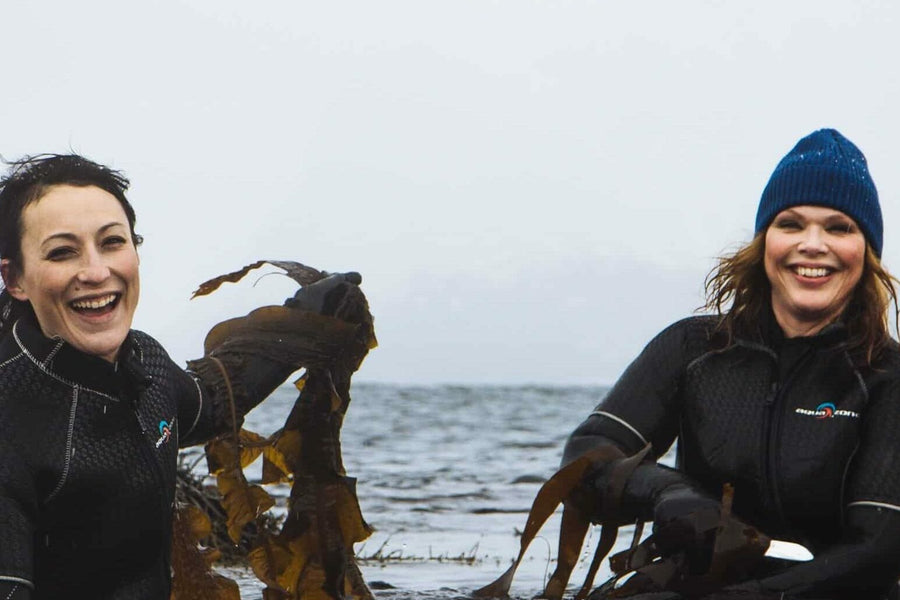
At Lofoten Seaweed we cut all of our seaweed by hand, making sure that the root system (or holdfast) is left in place, and that there is plenty of growth tissue (or meristem) remaining. We harvest during the peak of the growing season, by which point the seaweed has had plenty of time to reproduce and grow to a healthy length.
Monitoring Seaweed Regrowth and Biodiversity
As well as techniques used during the harvest, we carry out several pre- and post-harvest activities to ensure that sustainable harvesting is achieved. We’ve been carefully monitoring and recording variables such as dates, exact locations, and harvest volumes by species for the last three years in a central system.
By tracking harvest data we can estimate the rate of biomass recovery, meaning that we can easily avoid over-harvesting in any given area. We have a rotation system in place to ensure that each harvest patch has a chance to recover, but we’ve actually found that this is barely needed. Our results show that the regrowth in recently-harvested patches is actually faster than anticipated, almost as if a harvest actually stimulates growth!
As far as we’re aware, we are the only seaweed company in the world to be recording and tracking harvest data in this way.
Seaweed Farms and the Future of Sustainable Food
For now, 100% of our seaweed is wild-harvested. On occasion, if an order is exceptionally large, we will supplement our wild-harvested seaweed with organically farmed seaweed from Lofoten Blue Harvest.
The ocean covers 71% of our planet, but contributes only 2% of the world’s food supply (on a caloric basis). The UN predicts that by 2050, we will need to produce 50% more food than we do currently to sustain the Earth’s population, but current land-farming practices are not scalable.
This is why we’re excited about the future of responsible marine agriculture - or aquaculture - as a means of feeding the world sustainably.
Final Thoughts: Wild Seaweed – The Food of the Future
For now we will continue with sustainable harvesting by hand in Nappstraumen, taking good care of our seaweed - the food of the future.
Frequently Asked Questions
What is sustainable seaweed harvesting?
How do you harvest seaweed without killing it?
Why is hand-harvested seaweed different from trawled kelp?
When is the best time of year to harvest seaweed?
How do you avoid over-harvesting one area?
Do you rotate harvesting areas?
Is your seaweed wild-harvested or farmed?
I want to harvest seaweed myself. Where do I start?
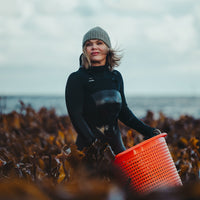
Angelita grew up cutting cod tongues and baiting long lines for her fisherman father in the village of Napp. The ocean was a lifeline for her family. But her curiosity around seaweed only arose when she was researching nutrition for her own health. Her discoveries led to a passionate belief that seaweed is the food of the future.