Beyond the Price Tag: The Ethical Toll of Shopping with Temu and Shein
The holiday season is here, and with it comes the annual frenzy of gift shopping. You’re scrolling through endless options online, maybe tempted by the irresistible deals on platforms like Temu or Shein. “How bad could it be?” you think, as you fill your cart with 100kr sweaters and 50kr phone cases. Well, here’s the thing: shopping with these fast-fashion giants isn’t just bad—it’s horrendous for the planet, the workers, small businesses, and even your wallet in the long run.
Let’s take a closer look at what’s really going on behind those glossy sales banners.
Navigate this article
- Ultra-low prices at Shein and Temu are enabled by cutting corners on labour, materials and durability.
- Cheap synthetic garments shed microplastics that end up in waterways, seafood and even human tissue.
- Both companies face repeated allegations of exploitative factory conditions and copied designs.
- Choosing quality, local or sustainable brands over fast fashion reduces the environmental and human cost.
Too Cheap to Be True? It Probably Is
Have you ever wondered how a company can sell a dress for less than the price of your morning latte? Spoiler: This isn't about clever business models; it's about exploitation. Shein and Temu have built global empires on the back of ultra-cheap and high-speed production. Often achieved by bypassing the ethical and environmental standards followed by others.
Shein alone introduced 1.3 million new styles in 2023 - that’s not individual items, but entirely new designs.[1] Imagine the resources needed to make that happen. The carbon footprint is staggering. Each garment’s journey involves cheap materials (think synthetic fabrics like polyester, which is essentially plastic), energy-intensive production, and long-haul shipping to your doorstep.[2] Every 50kr tee or 20kr necklace comes at a massive environmental cost, even if it doesn’t show up on your receipt.
And let’s talk about quality. These items are not designed to last. That 200kr coat might look good for one winter, but by spring, it’s landfill-bound. It’s not just wasteful; it’s part of a deliberate strategy to keep you buying more. A vicious cycle, isn’t it?
The Human Cost: Sweatshops, Forced Labor, and Misery
You’ve heard the phrase, “If something’s too good to be true, it probably is,” right? Well, the low prices on Temu and Shein come at an unimaginable human cost. Investigations have found that supply chains feeding ultra-fast fashion can involve exploitative sweatshop conditions, including extremely long shifts and punishing piece-rate systems.[3][4]
There are also ongoing forced-labour risks connected to supply-chain opacity, including scrutiny around Xinjiang-linked cotton and forced-labour due diligence.[5][6][7]
This isn’t just unethical; it’s a violation of basic human rights. These brands thrive on a business model that depends on cutting labour costs to the bone. And let’s not forget: when you buy from them, you’re funding this system. A sobering thought indeed.
Mountains of Waste, Rivers of Pollution
Fast fashion’s environmental impact doesn’t end when you click “Buy Now.” Once those cheaply made clothes fall apart - which they inevitably do - they’re tossed out. Most end up in landfills or are shipped to developing countries as “donations.” But here’s the thing: these nations often don’t have the infrastructure to deal with the massive influx of textile waste. So, rivers, lakes, and even oceans bear the brunt of the pollution.[8]
The ironic thing is that these countries are often vilified for “poor waste management,” conveniently ignoring the mountains of fast-fashion junk we export to them. It’s not just a case of passing the buck; it’s an outright environmental disaster.
Here’s the part that’s even more insidious: many of these textiles are made from synthetic materials like polyester, nylon, and acrylic - essentially, plastic.[2] When they degrade, they don’t just disappear. Instead, they break down into microplastics, tiny fragments of plastic that are almost impossible to clean up. These microplastics wash into waterways, eventually reaching the ocean, where they’re ingested by marine life.[2][9]
From plankton to fish, these particles climb their way up the food chain, and guess where they end up? On your dinner plate. Studies have already found microplastics in the seafood we eat and discuss the implications for human exposure and health.[10]
Studies have also reported microplastics and nanoplastics in human organs, including the brain, though this evidence is still developing and does not yet prove causation for specific health outcomes.[11]
It’s unsettling to think about, isn’t it? That bargain t-shirt might eventually make its way back to you - not in your closet, but in your stomach. This isn’t just a pollution issue; it’s a health crisis waiting to happen.
Copyright Theft and Creative Plunder
If you’re an independent designer or small business owner, Shein and Temu might just be your worst nightmare. Both have been repeatedly accused of stealing designs from small creators and passing them off as their own. It’s David vs. Goliath, except in this case, Goliath has billions in backing and zero accountability.[12]
The victims? Independent artists who can’t afford lengthy legal battles. Meanwhile, Shein and Temu rake in profits, leaving the little guys to pick up the pieces. Buying knockoff designs might feel like a harmless act, but it perpetuates a system that undermines creativity and hard work, and could eventually lead to the death of creative diversity in our marketplaces as independent artisans are driven out of business.
Data Harvesting: The Hidden Cost of “Free Shipping”
Temu and Shein aren’t just selling clothes; they’re collecting data. Ever wondered why their apps seem so pushy? It’s because they’re mining your information, often far beyond what’s necessary for a purchase. Some experts have even raised concerns about data harvesting schemes - from tracking your shopping habits to accessing your personal data.[13][14]
All of this begs the question: how much are you really paying for those cheap trainers?
The Pressure Cooker of Holiday Shipping
Around the holidays, the demand for cheap, fast delivery hits its peak. Massive platforms like Temu and Shein flood the market with orders, straining global delivery networks. Smaller, more sustainable businesses simply can’t compete.
Think about it: every package you order from these giants adds to the burden on logistics systems already buckling under the weight. It’s a ripple effect that hurts not just the environment but local economies, too. The race to the bottom in pricing is squeezing out businesses trying to do things the right way.
What Can You Do Instead?
Feeling overwhelmed? You’re not alone. But here’s the good news: there are better ways to shop this season. Here are a few ideas:
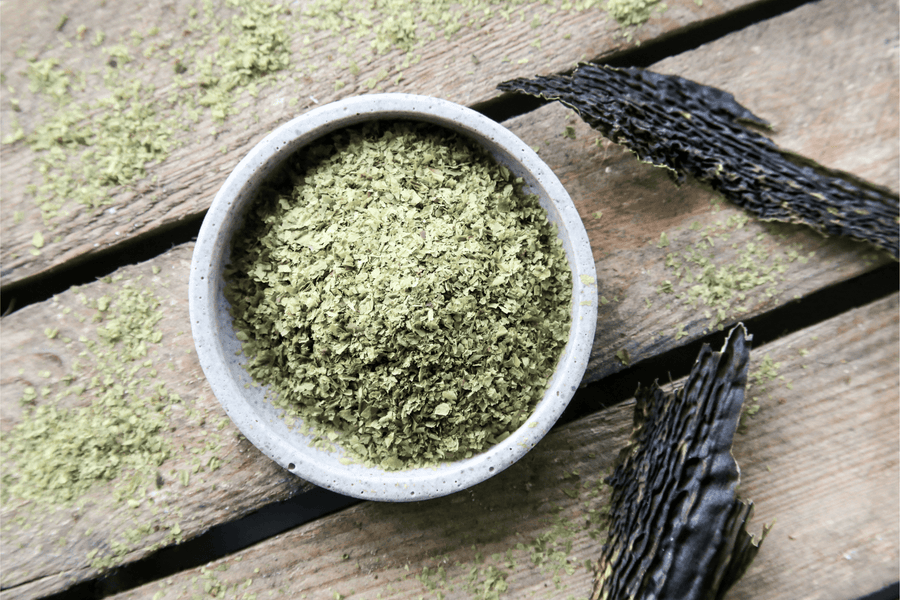
- Support Sustainable Brands: Companies like Lofoten Seaweed prioritise sustainability and quality. Your money goes towards sustainable practices, quality products, and real wages for working people
- Shop Local: Small businesses in your community offer unique, thoughtful gifts - and they don’t exploit workers or pollute the planet
- Choose Quality Over Quantity: Invest in fewer, higher-quality items that won’t fall apart after a few wears
- Gift Experiences: Instead of more “stuff,” consider giving experiences - dinner at a local restaurant, a concert ticket, or a handmade gift certificate for a day out
Let’s Rethink “Cheap”
At the end of the day, those rock-bottom prices from Temu and Shein aren’t actually cheap. They’re costing the planet, exploiting people, and even hurting your wallet when those poorly made products need constant replacing. It’s time to break the devastating cycle of consumption and waste, before it’s too late.
This holiday season, let’s shop consciously. The best gifts don’t just bring joy to the recipient - they do a little good for the world, too.
Sources
[1] Vox (Nov 14, 2023), “It’s time to break up with fast fashion”
https://www.vox.com/even-better/2023/11/14/23955673/fast-fashion-shein-hauls-environment-human-rights-violations
[2] UNEP (Mar 13, 2019), “Fashion’s tiny hidden secret” (synthetic textiles as plastic; microfibres shed during washing)
https://www.unep.org/news-and-stories/story/fashions-tiny-hidden-secret
[3] Business & Human Rights Resource Centre (Oct 16, 2022), summary of investigations reporting up to 18-hour shifts and minimal time off in Shein supplier factories
https://www.business-humanrights.org/en/latest-news/china-shein-factory-employees-work-18-hour-shifts-with-no-weekends-earning-just-two-cents-per-item-report-finds/
[4] Public Eye (May 14, 2024), follow-up investigation noting illegal working hours and piecework wages in Shein’s manufacturing network
https://www.publiceye.ch/en/topics/fashion/interviews-with-factory-employees-refute-sheins-promises-to-make-improvements
[5] Reuters (Jan 7, 2025), reporting on scrutiny over whether Shein uses cotton from China (Xinjiang concern raised in UK hearing)
https://www.reuters.com/business/retail-consumer/shein-representative-declines-say-if-company-uses-cotton-china-uk-hearing-2025-01-07/
[6] Reuters (Jan 24, 2025), Shein’s cotton sourcing policy submitted to UK lawmakers, aligned with UFLPA expectations for US sales
https://www.reuters.com/business/retail-consumer/shein-details-cotton-sourcing-policy-written-evidence-uk-lawmakers-2025-01-24/
[7] Business & Human Rights Resource Centre, summary of Bloomberg lab testing alleging Xinjiang-sourced cotton in Shein garments shipped to the US
https://www.business-humanrights.org/en/latest-news/china-laboratory-results-finds-shein-garment-samples-shipped-to-the-us-contain-cotton-sourced-from-xinjiang/
[8] The Guardian (Jun 18, 2025), “Discarded clothes from UK brands dumped in protected Ghana wetlands”
https://www.theguardian.com/world/2025/jun/18/discarded-clothes-from-uk-brands-dumped-in-protected-ghana-wetlands
[9] UNEP (Apr 28, 2023), “Microplastics: The long legacy left behind by plastic pollution” (includes textiles shedding microfibres)
https://www.unep.org/news-and-stories/story/microplastics-long-legacy-left-behind-plastic-pollution
[10] Smith et al. (2018), “Microplastics in Seafood and the Implications for Human Health” (review of exposure via seafood)
https://pmc.ncbi.nlm.nih.gov/articles/PMC6132564/
[11] Nihart et al., Nature Medicine, “Bioaccumulation of microplastics in decedent human brains”
https://www.nature.com/articles/s41591-024-03453-1
[12] Reuters (Jun 19, 2024), “What is at stake for China-founded e-commerce giant Shein as EU rule looms” (notes extensive lawsuits alleging design copying)
https://www.reuters.com/markets/deals/what-is-stake-china-founded-e-commerce-giant-shein-eu-rule-looms-2024-06-19/
[13] Arizona Attorney General press release (Dec 2, 2025), lawsuit alleging unlawful data collection and misleading consumers
https://www.azag.gov/press-release/attorney-general-mayes-sues-online-shopping-platform-temu-stealing-arizonans-data-and
[14] AP News (Dec 3, 2025), “Arizona attorney general sues Chinese online retailer Temu over data theft claims”
https://apnews.com/article/arizona-temu-lawsuit-14615cec4bb7927493a7208f9d23431b
Lofoten Seaweed is a coastal company dedicated to hand-harvested Arctic seaweed. Based in Lofoten, Norway, we combine traditional knowledge, sustainable harvesting practices and modern food innovation to develop premium seaweed seasonings, specialty foods and marine skincare. Our work connects ocean ecosystems with everyday kitchens.