What Is The White Stuff On Seaweed?
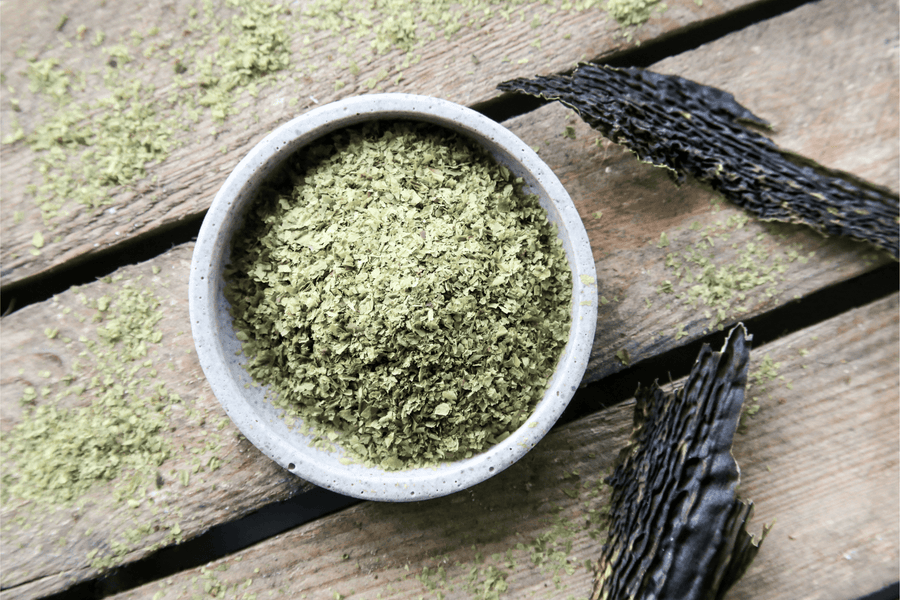
If you've ever snacked on dried seaweed or used it in your cooking, you might have noticed a white, powdery substance on its surface. Often mistaken for mould, this dusty residue is far from being a cause for concern. In actual fact, it tells us an interesting story about the natural properties of seaweed, and is actually a mark of a high-quality natural product.
Let's discuss what this substance is, and why it's there.
Navigate this article
Fresh, Dried, or Frozen?
When it comes to preparing seaweed for consumption, drying is one of the most common preservation methods used. Seaweed contains around 90% water, so when it's dehydrated it becomes very light, with very little opportunity for spoilage. Seaweed is also tasty eaten fresh, but it's hard to transport. You can also freeze fresh seaweed, but it takes up space and still has quite a bit of water weight. Drying it is by far the easiest and most practical solution for the long-term storage of our favourite ocean vegetable.
The White Powder Explained
The white powdery substance you often see on dried seaweed is the seaweed's organic salts and sugars; most often sodium chloride and mannitol. This stuff isn’t added artificially; it naturally occurs within the seaweed itself. Here’s how it ends up as a visible powder:
Natural Salt Content
Seaweed absorbs a variety of minerals from the sea, including sodium. When seaweed is harvested and dried, the water content evaporates but the minerals remain.
Crystallisation Process
As the seaweed dries, any moisture on the surface evaporates and the salts and sugars crystallise. This process leaves behind the fine, white powder that is often mistaken for mould, or a manufacturing additive.
Historical References
In Iceland, dulse was even used as a form of currency around the 700s, facilitating trade between coastal dwellers and inland communities. The cost of renting a farm was often expressed in terms of seaweed quantity, and the quality of seaweed was judged during the drying process. When it was rinsed and laid out to dry, a layer of white powder would appear on the leaves of the seaweed. The more concentrated the residue, the higher the quality of seaweed.
Is It Safe?
Absolutely! The powdery salt & sugars on dried seaweed is completely natural and safe to consume. In fact, it contributes to the overall flavour profile of the seaweed, enhancing its taste with a natural umami richness. It's actually a mark of quality, and is used to sort the seaweed into higher quality and lower quality batches. Basically, white powder = flavour!
Nutritional Benefits
Aside from providing a natural seasoning, the minerals in seaweed are beneficial to your health. Seaweed is known for its iodine content, which is crucial for a healthy thyroid, as well as being a good source of potassium, calcium, and magnesium. For those following a plant-based diet this is extra important, as we get a lot of our iodine through the consumption of animal proteins like meat and dairy. Seaweed is a plant-based, natural source of this all-important mineral. It’s also low in calories, making it an excellent addition to a healthy diet.
Conclusion
So, next time you encounter that mysterious white powder on your dried seaweed, remember that it's simply a sign of the seaweed's natural journey from ocean to table. This powdery residue is a hallmark of seaweed’s mineral-rich profile and an indicator of the minimal processing involved in its preparation. Enjoying dried seaweed means you’re getting a pure taste of the ocean, complete with all the health benefits it has to offer.
Frequently Asked Questions
What is the white powder on dried seaweed?
How can I tell the difference between seaweed crystals and mould?
Why does kombu develop a white bloom?
Is seaweed with white bloom safe to eat?
Does the white coating affect flavour?
What is the easiest way to start cooking with dried seaweed?

Tamara grew up in New Zealand, where her Japanese mother used seaweed in almost every meal, shaping her love for food and flavour. After moving to Norway, she began recreating the dishes of her childhood with hand-harvested seaweed from the Arctic coast. Today she brings her passion for Japanese cuisine and attention to detail to everything Lofoten Seaweed creates.